Vaccinations and the economic recovery of post-pandemic countries have revealed a situation, curiously complementary and simultaneous, of bottlenecks in chains in the same sectors in different countries. Very similar bottlenecks but that have been happening for different reasons, and a common reason. This reason we call financial Cartesianism, and it is the mentality behind most of the problems we are experiencing in the world today.

From financial Cartesianism came the mathematical models that allowed the creation of economic theories that came later, such as liberal, socialist and Keynesian, which end up sharing characteristics that derive from the Cartesian Mathematical Matrix, with which we calculate important indicators that command our lives as GDP and per-capita income.
“The invention of Cartesian coordinates in the 17th century by René Descartes revolutionized mathematics by providing the first systematic link between Euclidean geometry and algebra. The same principle can be used to specify the position of any point in three-dimensional space by three Cartesian coordinates .”

The proposition of this rational system of thought and planning of mathematical functions allowed humanity to take a leap of progress since the Middle Ages, which culminated in the industrial revolution, also supported by the theories of  Isaac Newton and Adam Smith, which were based on the Cartesian system of thought and planning of projects that enabled great advances in engineering, and this, in agriculture and industry. Therefore, Cartesian mathematics is also present in all economic theories subsequent to his work as it is also in the epistemology of these sciences. We see the world through Descartes’ lens when we look at GDP projections or an architectural design in AutoCAD. However, the Cartesian lens on our reality also promotes some reductionism and distortions that can become dangerous, as they leave huge blind spots while making those who use it obsessed with a single variable to be maximized.
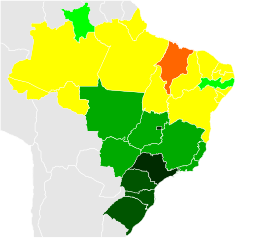
So through his lens we are tempted to believe, for example, that life in a place where per capita income is higher, like São Paulo, and Brasilia, is better than living in a place with lower per capita income like Bahia or Maranhão. But this metric alone will hide how many hours you will be stuck in traffic and how much you will pay for the services of a nanny, being able to trade this standard of living for lower costs, living near the beach in a small town, with no traffic and living in a bigger house.
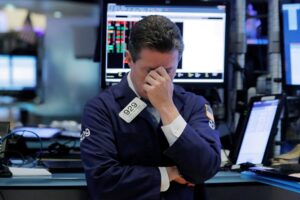
Another example of this blind spot is when we focus on the supposedly more knowledgeable class of managers, the class of those stock investors who look much older than they are and sleep a few hours a night following Asia’s markets at dawn, also known as day traders. These investors don’t know but they may be living on such high rates of  cortisol (the stress hormone) that they may be trading their future health for income that they may not even be able to pay the medical bill. Nor will you be able to buy the same natural health when it has already been lost. These are just two traps that the Cartesian Matrix induces us to fall into and that can cost a lot over the years if we do not systematically practice reflection, because if we are not careful, the Cartesian Matrix will end up inducing us to believe that the best places in the world are those where more money circulates, without informing so well what we have given up in order to reach the so-called “top”. Thus, where more money circulates than the average, human resources and everything else will necessarily be scarcer.

As a cumulative macroeconomic effect of this, we see hyper-developed countries such as Japan, Switzerland and Germany facing the problem of decreasing fertility rates in their families, as more and more families choose to have only one, or even not to have children, because the price of raising kids is prohibitive. The problem is so serious that governments have tried to offer aid to mothers to encourage them to have more children, but without much success so far. And at the same time that there is a lack of labor for basic services, there is a fear in these countries that in a few decades their original populations will be a minority compared to immigrant populations, causing the strengthening of conservative political groups.
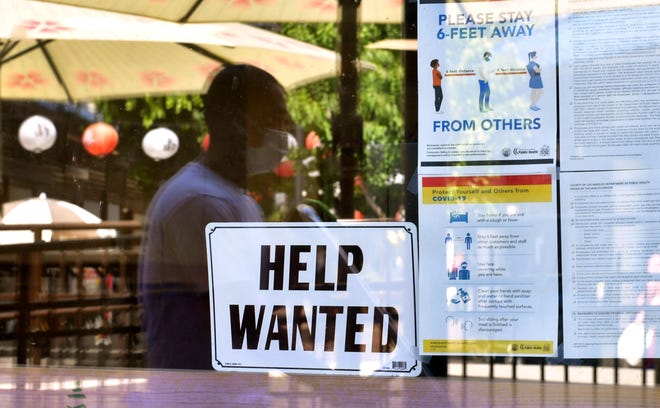
An extreme case is the case of the United Kingdom, which voted for Brexit and is currently suffering from a shortage of truck drivers to supply its cities’ super markets. Always fearful of going through some kind of shortage on their island, the British took good care of having enough money to buy everything and of leaving “the poor” out. But they got it wrong, producing a lack of someone to move these wealth around the country. The human capital bar is necessarily lower in those countries where there is a lot of money. Where everyone already has a lot of money for doing sophisticated work and services, there is a lack of people willing to do the simple and basic. The same is happening in the United States, as an effect of the US$1,400 emergency aid and the change of option for home office jobs of many American citizens.
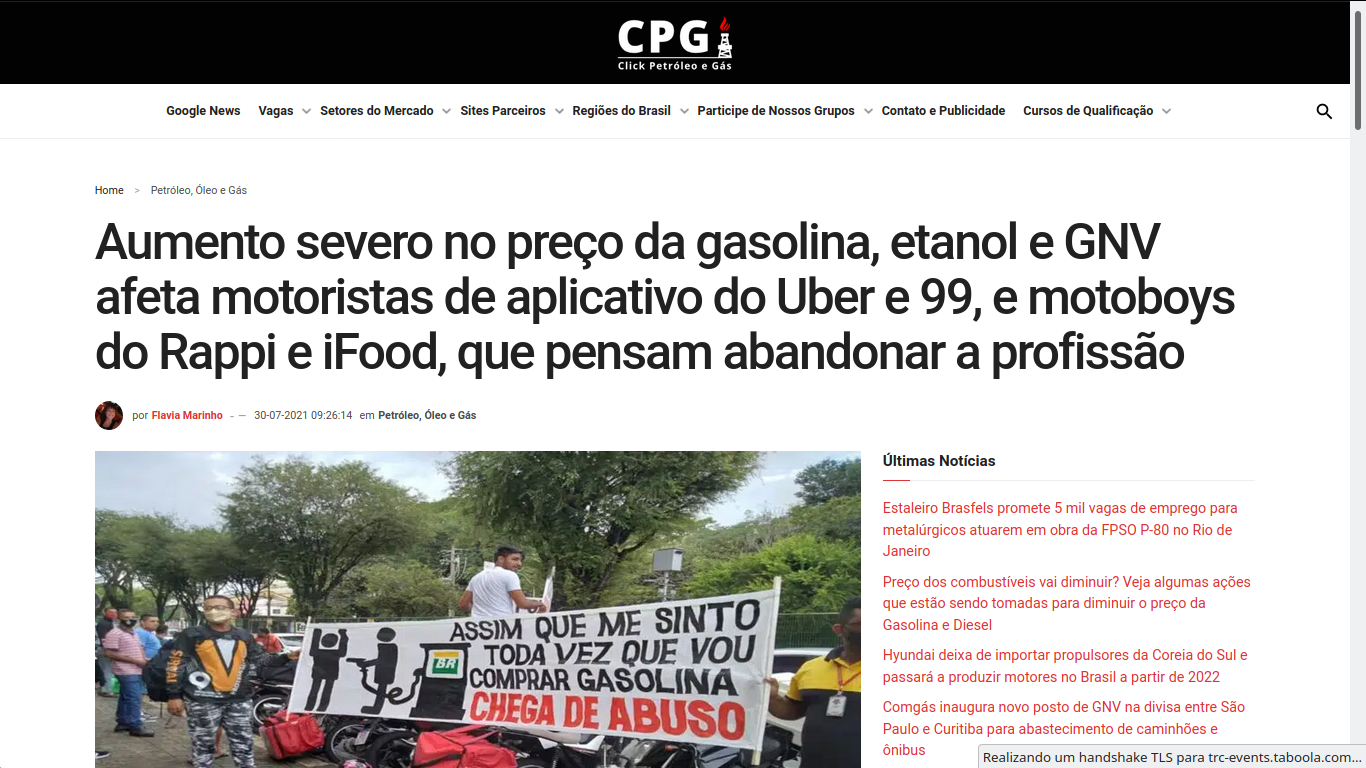
In Brazil, there is no shortage of manpower, but the problem is lack of fuel at a viable price for most truck drivers, motorcycle couriers or app drivers to be able to work.
Game theory calls this the Zero-Sum Game.
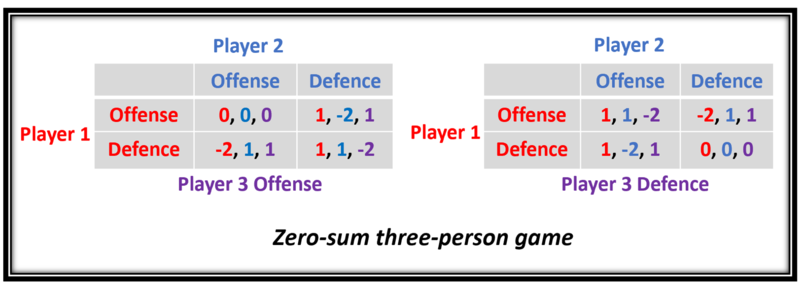
The lesson of this story is that it didn’t do much good to leave the financial table as a winner with more cash in hands. The Americans and the British were left with the same situation of idle capacity as we South Americans. Because financial Cartesianism has blinded markets to other dimensions that the Cartesian lens cannot show. It is necessary to understand that a rich country is not only rich in the financial dimension. A rich country is rich in the diversity and balance of its range of resources.
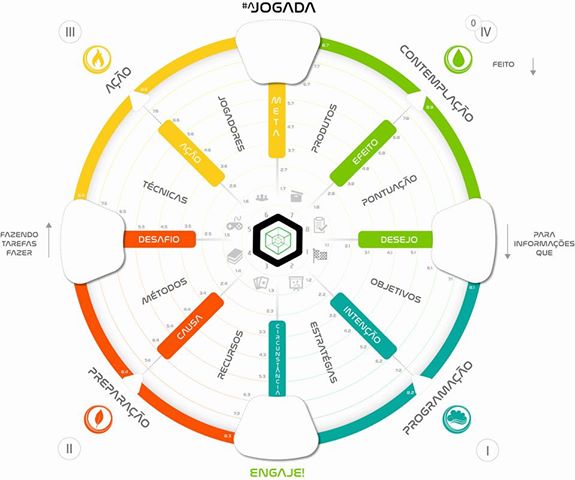
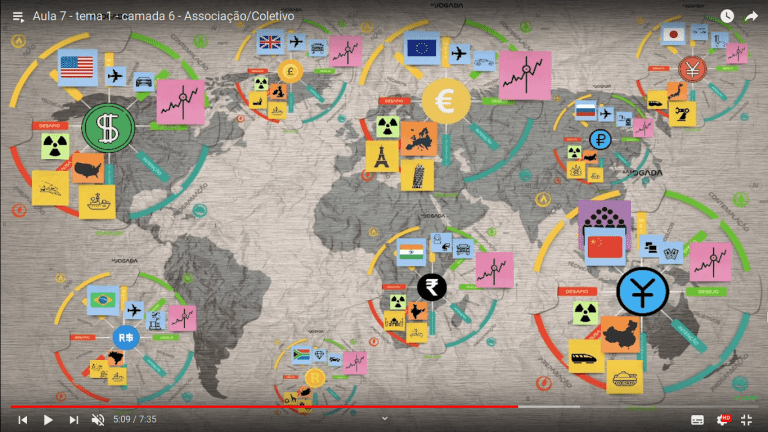
But the 4D lens of gameology can show this by showing that while the US, UK and Brazil play a Zero Sum Game, wasting time in the race for economic recovery trying to win against each other, China manages to collaborate in a Win-Win game with its allies and is accelerating its economy to the leadership of the 20s of this century. And who knows, of the entire 21st century.